
As a design leader, one of my key responsibilities is to set my team up for success. And no, that doesn’t just mean hiring talented people and giving them fancy tools! It’s about creating a structure that allows them to grow and thrive. In this case study, I’ll take you through how I developed and implemented a Design Talent Matrix at Vodafone that improved team efficiency, career development, and task allocation. Along the way, we faced some unexpected hurdles, but we kept pushing forward—because, hey, real growth never comes without some bumps!
TimeLine
2020
Team
Design Team
Tools
Disciplines
When I first took over the design team at Vodafone, we were facing a few challenges:
Task assignment headaches
With a mix of junior, mid-level, and senior designers, it wasn’t always easy to figure out who was best suited for which project.
Lack of clear career progression:
Designers didn’t have a clear path for how they could grow within the team, which left them feeling stuck.
High turnover
Without solid career development opportunities, designers were leaving faster than we could onboard new talent.
The Design Talent Matrix
To tackle these challenges, I introduced the Design Talent Matrix, a framework that would not only provide clarity around career progression but also help with task allocation. The matrix had two main components:
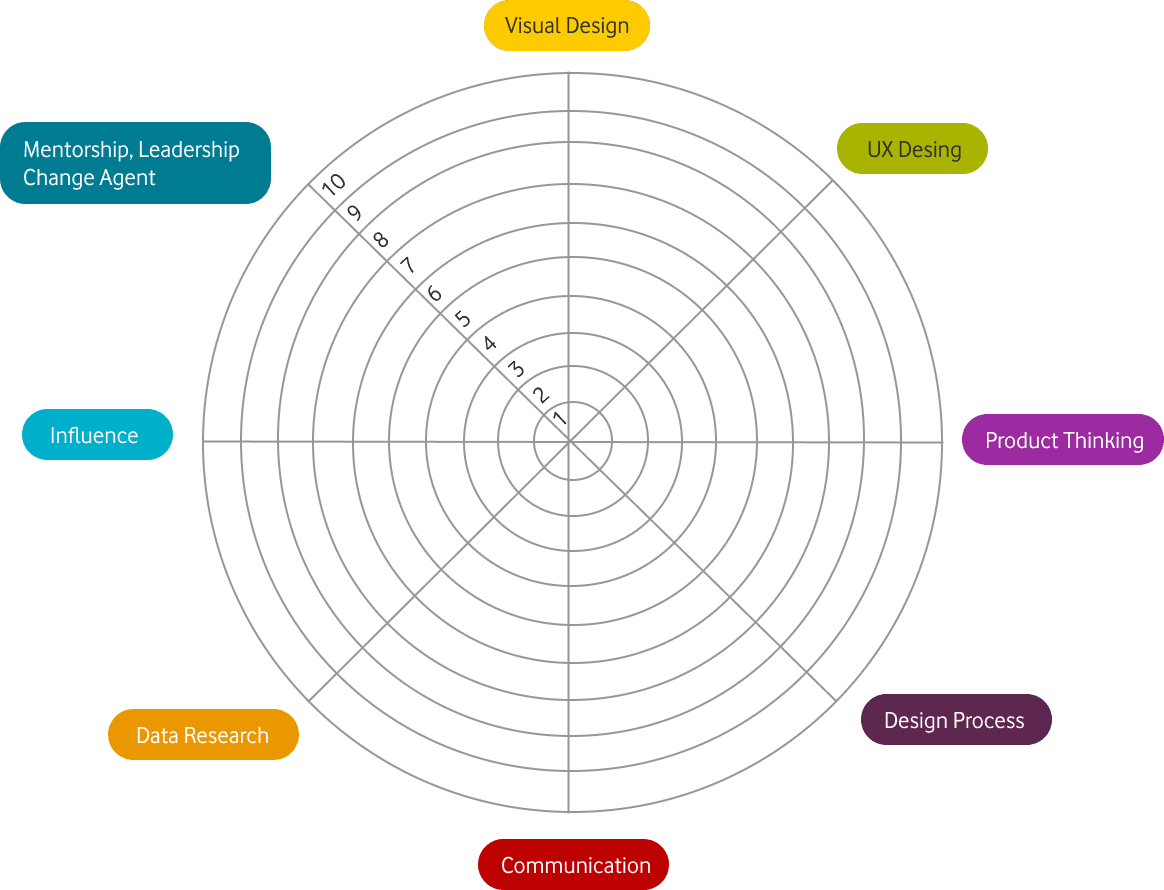
Core Skills
We identified five essential skills needed for success in our design team at Vodafone:
Craftsmanship: Mastery of UX/UI techniques, including using the Vodafone Design System and UX methodologies.Visual Design, Ux Design, Product Thinking and Design process.
Communication: Ability to communicate complex ideas clearly, driving value through design.
Ownership: Taking responsibility for professional growth and project priorities.
Engagement: Teamwork, contributing to the chapter, and collaborating across departments.
Influence: Impacting stakeholders and becoming a go-to person in the digital community.
Data & Research: Using research methodologies and data-driven insights to inform design decisions and improve user experience.
Experience Levels
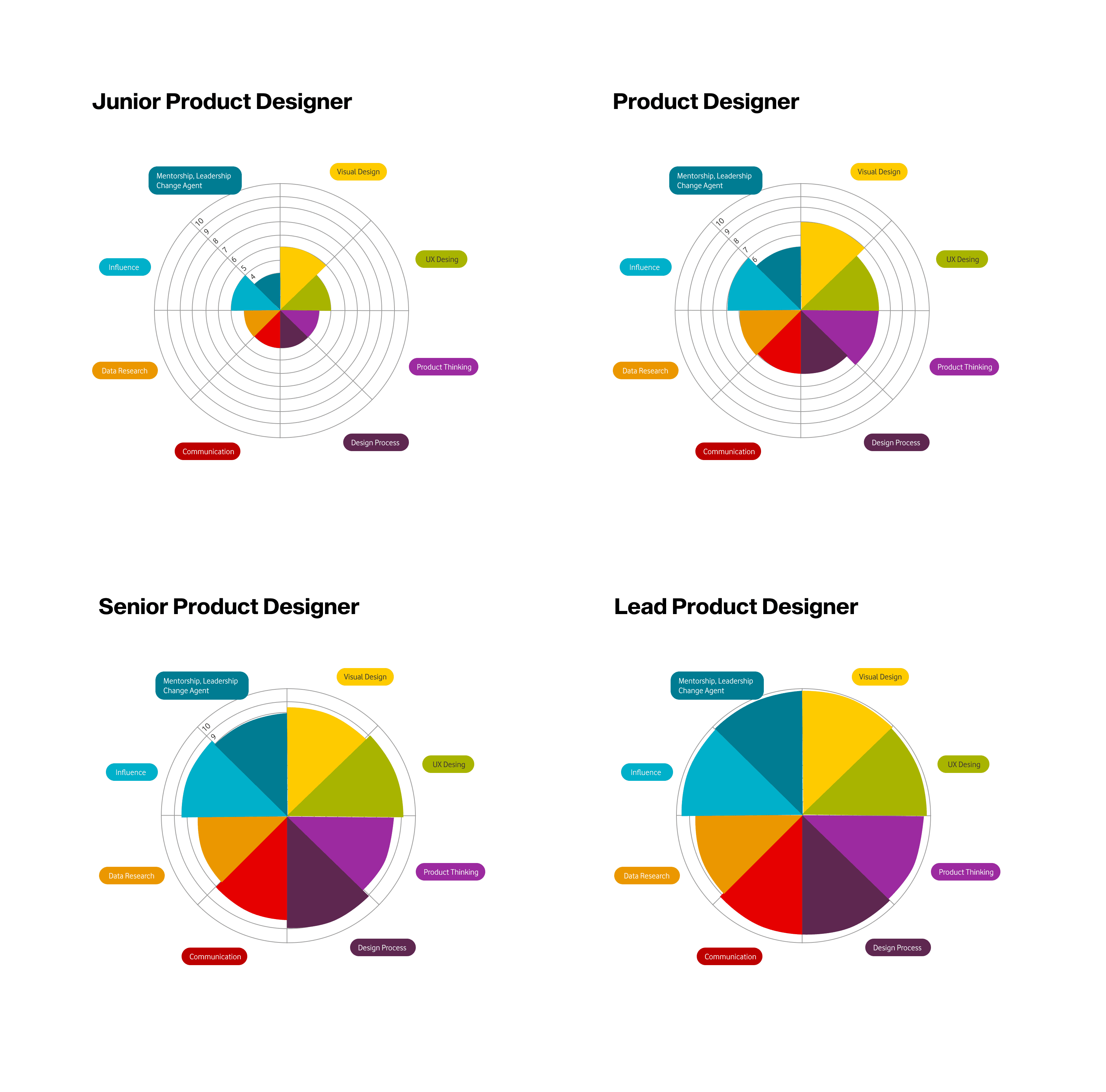
We defined four experience levels to provide a clear career path:
Junior Product Designer: Follows established guidelines and needs guidance on basic tasks.
Product Designer: Generally independent, requires coaching on certain areas.
Senior Product Designer: Works independently on fairly complex tasks.
Lead Product Designer: Has deep expertise, mentors others, and influences the team’s strategy.
Implementation of the Matrix
Team Evaluation: We evaluated each team member using the matrix, identifying their strengths and areas for growth across each core skill and their current experience level.
Personal Development Plans: We worked one-on-one with each designer to create tailored development plans. These plans included specific goals, learning resources, and mentorship opportunities. Everyone had a path forward, and it wasn’t just about “doing more”; it was about doing better.
Strategic Task Assignment: Armed with the matrix, we could now assign tasks much more strategically. Designers got projects that matched their strengths and gave them room to grow. The result? Happier designers and way fewer “Who should do this?” moments in team meetings.
Regular Check-ins: We scheduled periodic reviews to track progress, provide feedback, and adjust development plans as needed. This kept everyone on track and motivated.
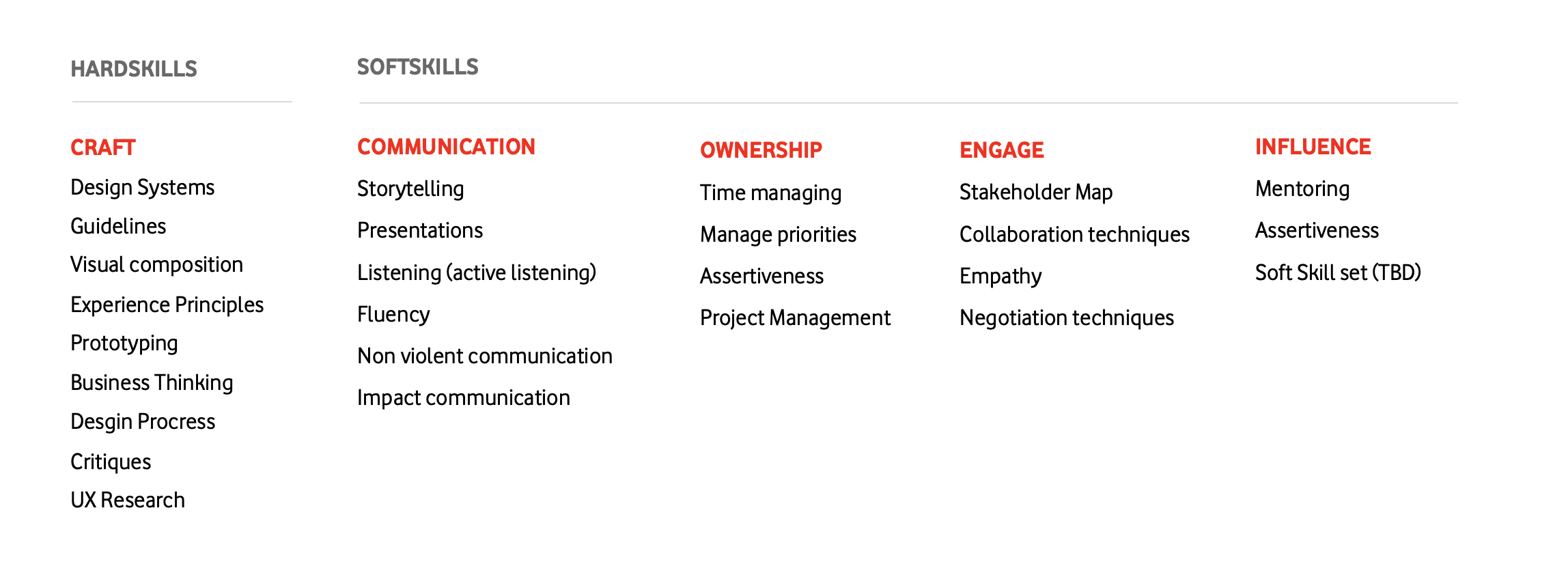
Design Trainings content based on Design talent Matrix needs
What Didn't Go as Planned:
While the matrix worked wonders within our design team, scaling it company-wide was a different story. One of our biggest hurdles was getting HR on board to formalize this as a standard across all technical roles, including design.
Initial roadblock with HR: The design team was moving fast with the matrix, but for the matrix to truly unlock its potential, we needed to integrate it with HR policies. We started advocating to have the career progression criteria set as official guidelines for all technical profiles at Vodafone.
Progress with development teams: While we did see a similar framework begin to take root with the development teams due to sheer volume, design was a bit behind. The matrix remained a tool we used only within our department.
Ongoing work with HR: We continued to work with HR to integrate this framework into the official contractual conditions for designers, ensuring that career progression was clearly outlined in hiring and promotion discussions. Although we haven't fully rolled it out company-wide yet, we're pushing toward making it an official practice across Vodafone.
Despite these challenges, the Design Talent Matrix had a significant positive impact within the design department:
Improved Task Allocation
By understanding each designer’s strengths and experience levels, we assigned tasks more efficiently. Designers worked on projects that both aligned with their skills and gave them opportunities for growth.
Clear Career Progression
The matrix provided a transparent career path, which motivated designers to enhance their skills and aim for promotions. It took the mystery out of career development.
Increased Retention
With a solid growth plan in place and meaningful work assignments, our turnover rate dropped significantly—almost to zero.
Stronger Team Culture
The matrix fostered a culture of continuous learning, collaboration, and mutual support. Designers felt empowered to help each other and grow as a team.
The Design Talent Matrix proved to be an invaluable tool for building and managing a high-performing design team at Vodafone. While we’re still working on making it a company-wide standard, its implementation in the design department has already led to significant improvements in efficiency, task allocation, and career progression. By providing clarity and structure, we created an environment where designers felt valued, motivated, and, most importantly, excited to grow.
The journey is ongoing, but the results so far speak for themselves: a stronger, happier team and almost no turnover. And as we continue working with HR to formalize this across Vodafone, I’m confident that the entire organization will benefit from this structured approach to talent development.