
In 2018, Vodafone Spain stood at a crossroads. The company was embracing agile at scale, with squads and tribes leading the charge toward digital transformation. But behind the scenes, design was struggling to keep pace. Designers were scattered, tools were inconsistent, and processes were fragmented. The stakes were clear: evolve or fall behind. This is the story of how we turned a scattered team into a powerhouse of efficiency, collaboration, and innovation.
TimeLine
2018-2024
Team
Design Team
Tools
Disciplines
Timeline: 2018-2019
Team: Design Chapter (10 designers)
Tools: Sketch, InVision, Confluence
Disciplines: Team management, Design Ops, UX Research
The initial goal was simple but ambitious: make design an integral part of Vodafone’s agile journey. To achieve this, we needed to standardize tools, processes, and ways of working across squads and tribes. But more importantly, we needed to change mindsets.
“In the early days, it wasn’t about flashy designs—it was about getting the basics right. We had to earn our seat at the table.”
Key Milestones
Unified Tools
Moving everyone to Sketch and InVision enabled collaboration and reduced design cycle times by 20%.
Design Libraries
The creation of shared design libraries increased visual consistency across platforms by 40%.
Streamlined Onboarding
A new onboarding framework cut ramp-up times for designers by 30% ensuring they contributed meaningfully from day one.
"Create a simple, accessible space for everyone. It doesn’t matter how beautiful Notion looks if the organization can’t access it."
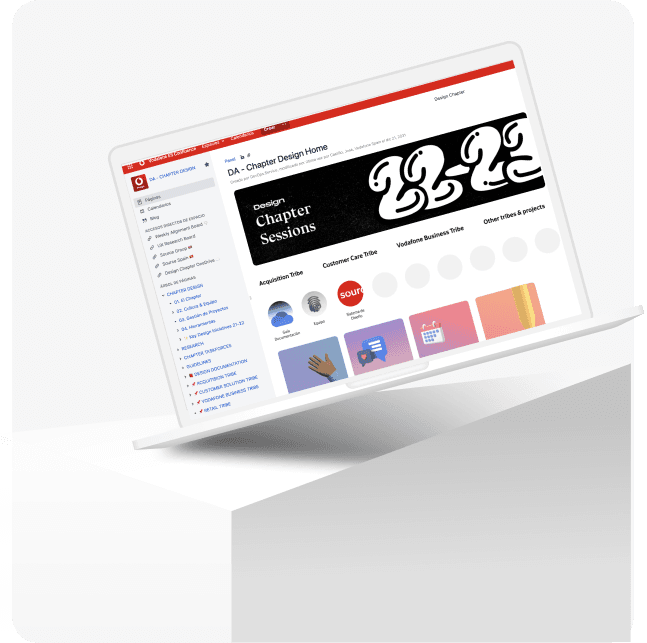
At Vodafone, we used Confluence as our shared documentation tool. I designed an organized space where every team member could easily access onboarding processes, tools, libraries, and later, design systems. This streamlined communication and drastically reduced the number of emails and chats asking about passwords, usage instructions, stock image credits, naming conventions, and more. By centralizing information in an intuitive, easy-to-navigate space, we saved countless hours and ensured that the entire company was aligned and well-informed.
Timeline: 2019-2020
Team: Expanded to 20 designers
New Tools: Figma, ResearchOps tools
Disciplines: Design Systems, Data-Driven Design, Research
With the foundation set, the next step was to embed design deeper into the organization. We introduced a data-driven mindset and launched our flagship initiative: the Source Design System.
“Source wasn’t just a design system—it was a cultural shift. It gave designers a common language and empowered them to focus on what truly mattered: solving user problems.”
Key Milestones
Source Design System
This became a cornerstone of our strategy, reducing redundant work by 45% and boosting consistency across digital products.
UX Loves Data Framework
By integrating data into design decisions, we increased accuracy by 35%, creating a culture of data-driven design.
Research Lab
Centralizing user research allowed us to test and validate ideas faster, increasing user testing by 50%.
"The most powerful tool for a design team in a large corporation is data"
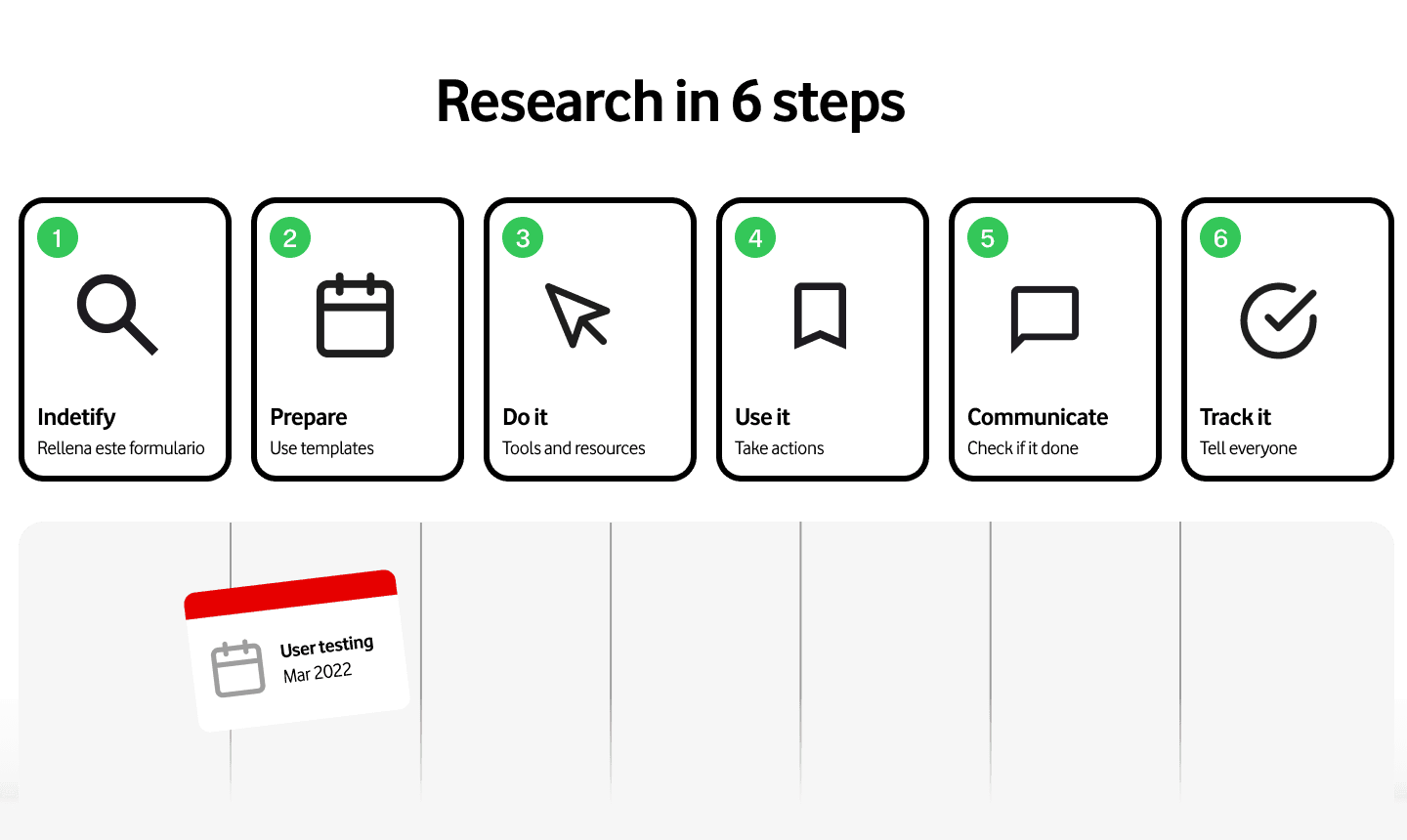
In addition to operationalizing design processes and contributing to a global design system that saves time in both development and design, the team needed to create an impact to ensure design decisions were taken seriously. That’s why I incorporated both qualitative and quantitative data into our framework. Alongside the CRO team, we developed a comprehensive workflow that included the creation of a proprietary tool (CRO Suite) to centralize all tests—combining both CRO and user testing. From identifying the need to measuring the business impact of test findings, the entire process was streamlined, fast, and measurable.
Timeline: 2020-2022
Team: 35 designers across Spain and global teams
Disciplines: Cross-functional Collaboration, Digital Strategy
By 2020, Design Ops had matured. But why stop there? We expanded our influence beyond digital, impacting physical retail, marketing, and operations.
"Design is no longer confined to screens. It’s in how we talk to customers, how we shape experiences, and how we build trust"
Key Milestones
Re/Source Squad
Dedicated to evolving the design system, reducing time-to-market by 20%
Web Simplicity Initiative
Overhauling Vodafone.es improved NPS by 10 points and simplified the user journey
Digital First Strategy
Prioritizing digital product creation led to a 25% boost in customer satisfaction
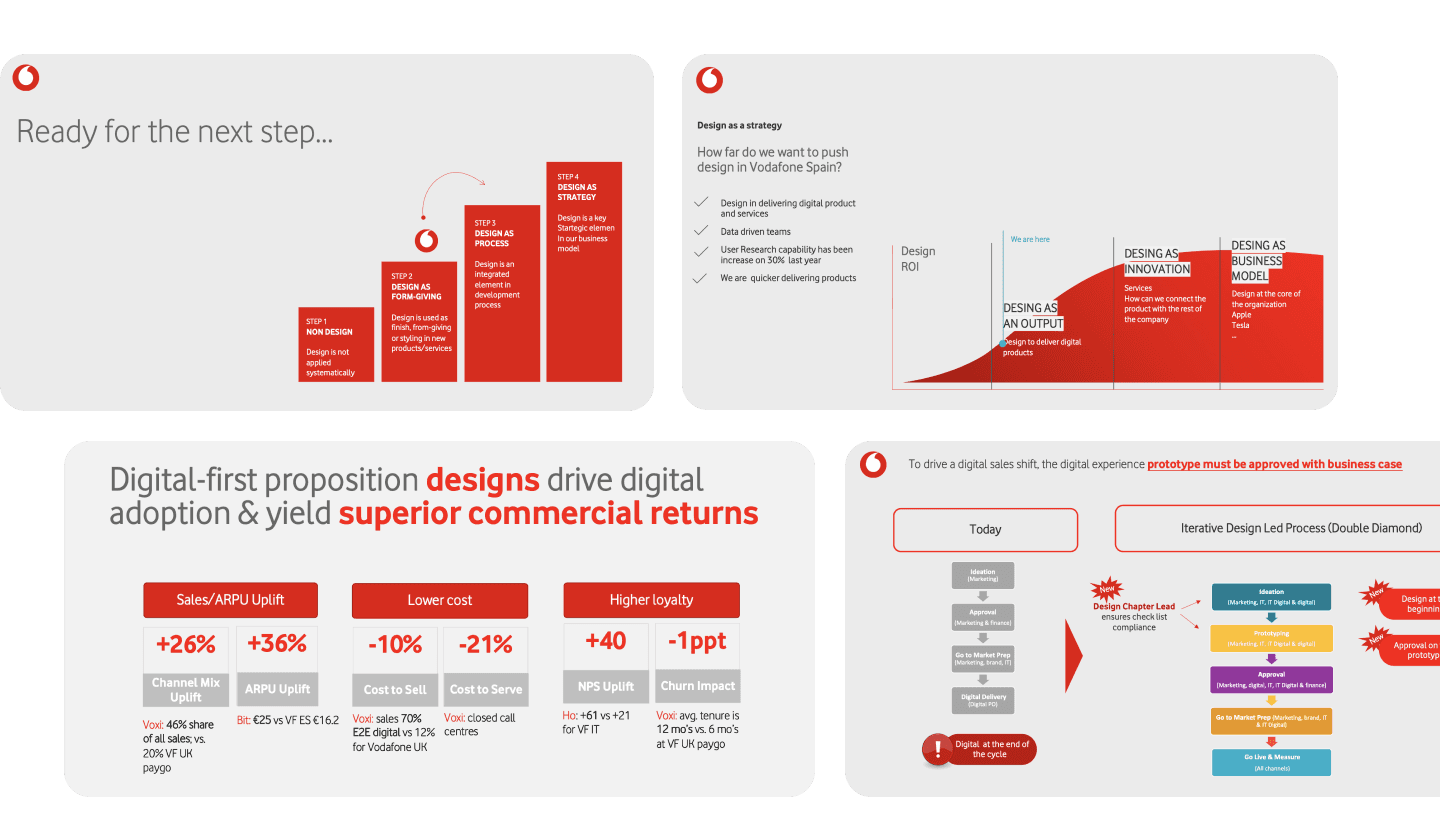
"Digital First was an initiative aimed at positioning product design as a key area within the organization, by creating work processes focused on maximizing the impact of design on business outcomes."
"Transforming design processes within a company doesn't just enhance the design team's efficiency—it directly drives business outcomes. It cuts costs, speeds up time-to-market, and elevates product quality. In essence, effective design is a business strategy."
Key Metrics
30% Faster Time-to-Market
Thanks to better collaboration and the Source Design System.
20% Cost Savings
Standardized tools and processes freed up resources for innovation
+15 NPS Points
User-centered design and continuous testing drove higher customer satisfaction.
Global Adoption
Source became a blueprint for Vodafone Group, recognized as one of Europe’s largest design systems.
Challenges Overcome
Cross-Functional Alignment
Breaking silos between design, HR, and legal took persistence but paid off in the long run.
Design System Governance
Finding the balance between agility and consistency required careful stakeholder management.
“Leadership in design is about more than pixels. It’s about creating an environment where great design can thrive—and aligning it with business goals.”
As Design Manager and later Head of Design, my role was to champion design as a strategic force. I led initiatives like the Source Design System, drove data-driven frameworks, and expanded the team’s influence across the organization.
The journey of Design Ops at Vodafone Spain is one of transformation. From a fragmented team to a strategic powerhouse, we redefined what design could achieve. By integrating systems, fostering collaboration, and embedding design into every facet of the business, we not only delivered better products but also created a culture where design is seen as a driver of business success.
The takeaway? When Design operates at its best, it doesn`t just create a better products - it creates a better business.